How to Choose the Right Winch Electric Hoist for Your Needs?
Choosing the right Winch Electric Hoist can be a daunting task. The market is flooded with options, making it hard to decide. According to a recent report by the Material Handling Industry, sales of electric hoists are expected to rise by 15% annually. This growth highlights their increasing importance in manufacturing and construction sectors.
Expert James McFadden, a leading authority in material handling, states, “Selecting a suitable hoist requires a deep understanding of your operational needs.” His insight emphasizes the necessity of analyzing specific requirements. Weight capacity, lift height, and power source should all be considered.
However, not all electric hoists are created equal. Some may lack the durability needed for heavy-duty tasks. It’s crucial to evaluate both performance and reliability. Balancing these elements can be challenging but is essential for successful operations. Finding a hoist that fits your specific needs can lead to more efficient workflows.
Factors to Consider When Choosing an Electric Hoist for Your Industry Needs
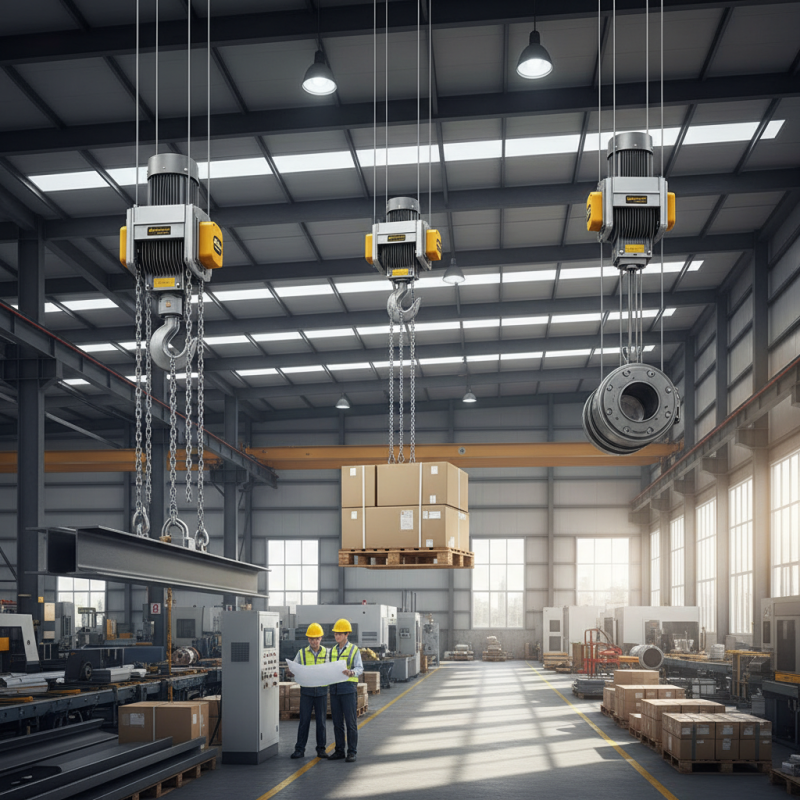
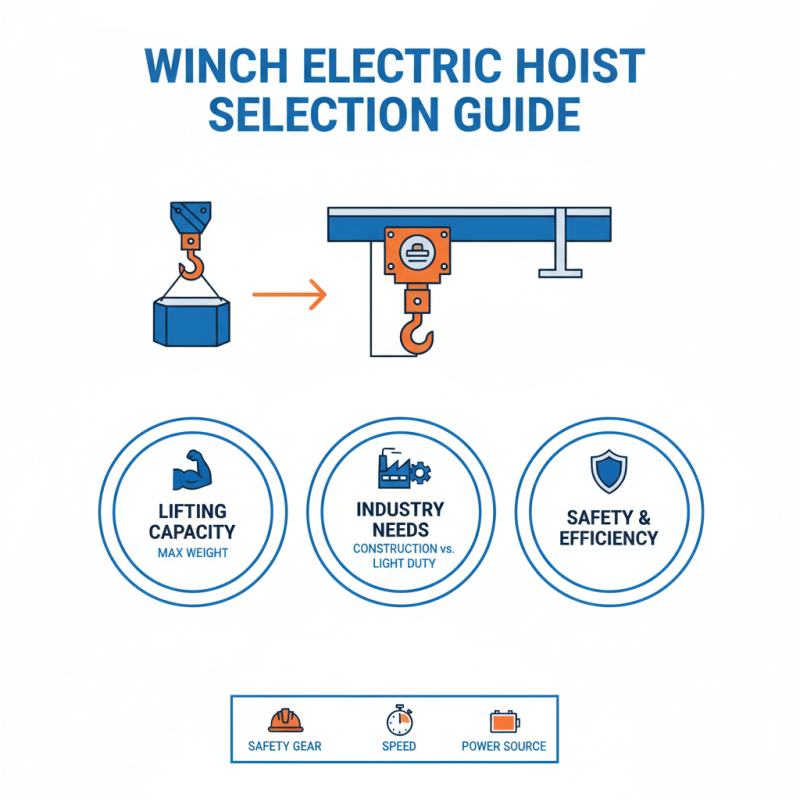
When selecting the right winch electric hoist, several factors matter. Understand your lifting capacity needs. Determine the maximum weight you need to lift. This is crucial for safety and efficiency. Different industries have varying requirements. Construction sites may need more robust equipment. Meanwhile, smaller tasks may require lighter models.
Consider the environment where the hoist will be used. Outdoor sites may expose equipment to harsh weather. Indoor environments might need quieter systems. Understanding these details helps narrow down your choices. Choose a hoist that fits well in the space available. Measure the headroom and accessibility before purchasing.
Tips: Always check for additional features. Remote controls can enhance safety. Also, look for overload protection systems. These can prevent accidents and equipment failure. Test the hoist before full use if possible. This ensures it functions as expected. Think about maintenance needs as well. Some hoists require more upkeep than others. Factor this into your decision-making process.
Understanding Load Capacity Ratings and Safety Margins for Electric Hoists
When choosing an electric hoist, understanding load capacity ratings is crucial. Load capacity indicates how much weight the hoist can safely lift. However, relying solely on this number can be misleading. Factors like the hoist's design and the lifting environment must also be considered. Safety margins play an essential role here. A hoist rated for 1000 pounds might not perform optimally if it is constantly pushed to its limit.
Tips: Always assess the actual load requirements before purchase. Add a buffer for unexpected weight. A 20% safety margin is often recommended. It’s also wise to think about future needs. Selecting a hoist with a higher capacity may save you money down the road.
Additionally, think about the conditions where the hoist will operate. Environments like dusty or wet spaces can affect performance. Understand that not all hoists thrive under extreme conditions. Regular maintenance can help, but it’s not a substitute for proper initial choice. Before commitment, reflect on both the immediate and long-term applications.
Evaluating Power Supply Requirements for Different Electric Hoist Models
When selecting an electric hoist, understanding power supply requirements is crucial. Different models have varying needs. Thus, assessing your power source is essential. Some hoists operate on standard voltages, while others may require specialized circuits. Confirm the voltage available at your work site or facility.
Tips: Always consult the hoist's manual for specific power requirements. This will help in making a reliable choice. If unsure, consider hiring an electrician for further assistance.
The load capacity of the hoist also affects power consumption. Heavier loads can draw more energy. This can influence your power supply needs. In some cases, a higher capacity hoist may require upgraded electrical infrastructure. It’s essential to think about future projects and their power needs, too.
Tips: Measure your work area's power output before buying. This prevents potential compatibility issues later on. If you're uncertain, it might be wise to opt for a model with flexible power options.
Analyzing Hoist Speed and Operation Types for Optimal Performance
When choosing an electric hoist, hoist speed and operation type are crucial factors. The speed of a hoist affects how quickly you can complete tasks. For light lifting, a slower speed suffices. However, faster speeds are essential for larger loads or urgent timelines. A hoist that operates at moderate speeds may be convenient for most applications.
Different operation types offer varied performance. Some hoists have simple controls, which are easy for beginners. Others might include advanced features for professionals. Think about where you will use the hoist. In tight spaces, a compact model could work best. But remember, complexity in operation can lead to mistakes under pressure.
It's important to assess your comfort with technology. Do you prefer manual control or remote operation? Remote control provides distance but may lack a tactile feel. All these factors impact efficiency in real-world scenarios. Choosing the right hoist isn’t just about speed; it’s about matching the tool to your specific needs. Evaluating these points can lead to better decision-making.
How to Choose the Right Winch Electric Hoist for Your Needs?
| Hoist Type |
Load Capacity (lbs) |
Lift Speed (ft/min) |
Power Source |
Operation Type |
| Electric Chain Hoist |
2000 lbs |
16 ft/min |
Electric |
Remote Control |
| Electric Wire Rope Hoist |
5000 lbs |
10 ft/min |
Electric |
Push Button |
| Pneumatic Hoist |
1500 lbs |
20 ft/min |
Pneumatic |
Air Operated |
| Portable Electric Hoist |
1000 lbs |
30 ft/min |
Electric |
Remote Control |
| Electric Strap Hoist |
800 lbs |
15 ft/min |
Electric |
Manual & Remote |
Comparative Overview of Top Electric Hoist Brands and Their Features
When selecting an electric hoist, understanding brand features is crucial. Different brands offer unique specifications. Some focus on weight capacity, while others emphasize speed. It's essential to assess what best fits your needs.
One popular option includes models with impressive lifting capacities. If robust power is crucial for you, don't overlook those with higher ratings. However, be aware that the most powerful option may not always be the best for smaller tasks. Each project has specific needs.
Tip: Always check the hoist's duty cycle. A hoist designed for continuous use differs from one made for occasional jobs. This could impact your efficiency.
Another consideration is safety features. Some models have built-in overload protection. This feature can prevent accidents but also adds to the cost. Evaluate the trade-off between price and safety.
Tip: Consider the weight of the hoist itself. Heavier models may offer stability but can be cumbersome. Think about how often you'll need to move the hoist. Mobility matters in practical use.
In summary, prioritize your project requirements when choosing a brand. Evaluate features carefully, and don't rush the decision. Each choice should align with your specific tasks and handling preferences.
Electric Hoist Loading Capacity Comparison



 Ms.Lily International Sales Director
 Join 3S Group